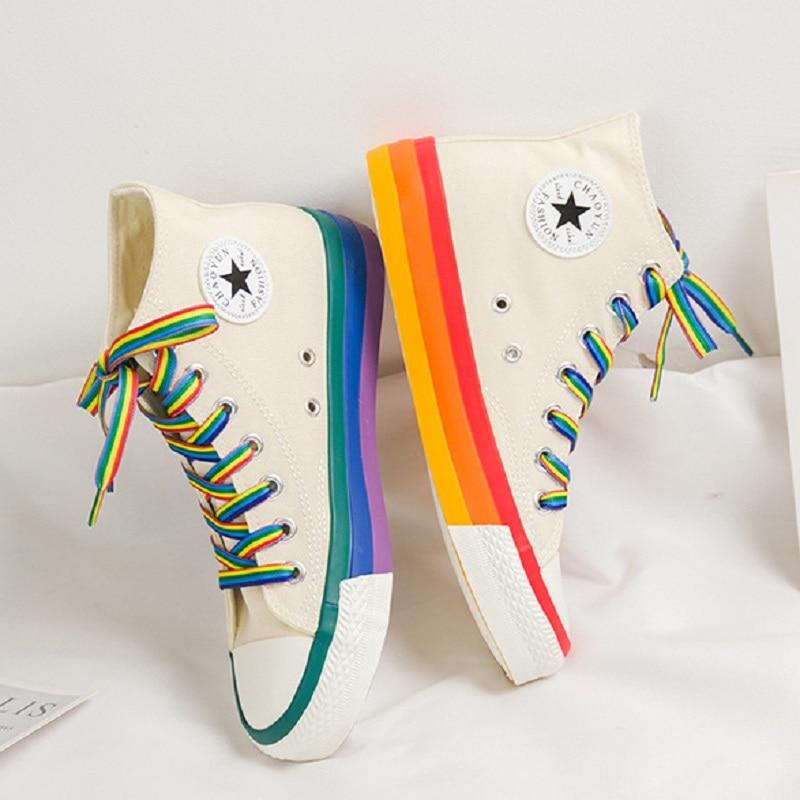

Back in 2020, I started an AliExpress dropshipping business with a Shopify store carrying around 100 different products.
Like most brand-new stores, it didn't exactly take off on its own. I had products, a website, and technically a business—but almost nobody knew it existed.
So I decided to experiment with Facebook ads.
I didn't have a huge advertising budget. I started with about $25 per day and ran a fairly broad test across products in the store. One item started getting noticeably more attention than everything else: a pair of rainbow high-top sneakers.
They were available in small, medium, and large and were being fulfilled through an AliExpress supplier.
Once I noticed the shoes were actually generating sales, I stopped spreading my small ad budget around and focused it on the product that was working.
That decision changed everything.
$25 In, Roughly $50 Back
At around $25 per day in advertising, I was bringing in roughly twice that amount in sales.
I left the campaign alone for a few days because one thing I've learned is that constantly messing with an ad campaign that's working can sometimes do more harm than good.
For several days, the pattern stayed surprisingly consistent:
Spend about $25. Make roughly $50 back.
At that point, I started wondering what would happen if I increased the budget.
So I moved it to $50 per day.
Sales increased with it.
Then I started scaling:
$50 → $100 → $200 → $250 per day
Eventually, toward the end of the campaign, I tried pushing the budget as high as $500 per day.
For a while, the campaign was producing roughly twice what I was putting into it.
That month—March 2020—I believe the store did around $25,000 in sales, with roughly $9,000 in profit.
Did I strike it rich?
No.
But making around $9,000 in a month from a little dropshipping store I had put together was a pretty incredible experience.
Processing the Orders Became a Routine
Once sales started coming in consistently, fulfillment became almost mechanical.
I figured out that I could comfortably process an order in about 1 minute and 30 seconds.
On an average day, I was seeing somewhere around 20–30 orders.
Depending on the day and the orders coming through, I was making somewhere in the neighborhood of $256–$400 per day for around an hours worth of work.
For a while, it felt like I had found a machine:
Run the ads.
Orders come in.
Process the orders.
Repeat.
Of course, it wasn't quite that simple.
Scaling Didn't Work Forever
One of the biggest lessons came when I assumed that if $250 per day worked, then $500 per day should simply produce twice as much.
It didn't.
I wasn't really prepared for a $500/day advertising budget, but I set it anyway because I expected everything to continue scaling proportionally.
It didn't.
Performance started changing, so I eventually backed the campaign down to around $250 per day, where it stayed until the campaign finally ran its course.
Looking back now, I understand far more about scaling, winning products, audiences, ad fatigue, margins, and campaign management than I did then. A $500 daily budget would have worked if my audience matched the expectations.
At the time, I was mostly learning by watching the numbers move.
The Product Had One Huge Problem
The sneakers were dropshipped directly from AliExpress.
Shipping took anywhere from about 3–8 weeks.
That became a serious weakness.
People were buying, but I wasn't prepared for what happens when you're selling a product successfully and customers then have to wait weeks to receive it. I obviously received handfuls of complaints and some refunds.
If I were doing it again, one of my first priorities would be finding a sourcing or fulfillment agent who could help get the same product shipped in days instead of weeks.
At the time, I didn't even know that was something I should be looking for.
I was figuring everything out as I went.
I Also Wasted the Customer List
This may be one of the biggest mistakes I made.
I had hundreds of people buying something from me, and I did almost nothing to turn those buyers into future customers.
I should have been building an email list.
I should have had better follow-up.
I should have had promotions for previous customers.
I should have been collecting useful customer information—with permission—that could help me sell related products later.
Instead, most of the relationship ended once the order was processed.
That was a massive missed opportunity.
If I Could Do It Again
If I could go back to that campaign knowing what I know now, I would do several things differently.
I would probably scale the successful campaign more intelligently and possibly sooner.
I would test increasing the product price—perhaps by around 10%—instead of assuming the existing price was already optimal.
I would get serious about faster fulfillment immediately.
I would build an email list from day one.
I would create follow-up offers.
And I would pay much closer attention to the actual economics of scaling instead of assuming that doubling an advertising budget automatically doubles the result.
The Bigger Lesson
The whole experience taught me something that has stuck with me ever since:
When you find something people genuinely want, solving that need can become much more powerful than having a store full of things nobody particularly cares about.
I started with around 100 products.
One pair of shoes ended up doing most of the interesting work.
Was some of it timing and luck?
Absolutely.
It was March. They were rainbow high-top sneakers. I'll let you do the math on timing and seasonal demand.
But luck alone didn't make the sales happen. The product got attention, the advertising converted that attention into buyers, and once I recognized what was happening, I moved the advertising budget toward the thing that was actually working.
That's probably the biggest lesson I'd pass along to someone experimenting with ecommerce or dropshipping:
Watch what your customers are already telling you.
If one product suddenly starts pulling away from everything else, don't ignore it just because you originally planned to promote the entire store equally.
You may have found a winner.
That doesn't mean blindly throwing money at it. Watch your margins, fulfillment, conversion rate, advertising costs, customer experience, and how the campaign behaves as you scale.
But when something is clearly working, it may be worth focusing your attention—and your budget—on the product that's actually earning it.
I just figured I'd share my first real deep dive into making money online from home story.
Cheers.